

“Add some FAQs”
If you own a website, if you’re interested in brand visibility, then I would happily take ten quid to the bookies and bet you’ve heard this advice in the last 18 months. Lord knows we have … from some of the most highly paid speakers in the world (Marcus Sheridan, Brad Sugars) to lowly AI widgets.
It started with “Use the People Also Ask as your H2s and H3s”, and has more recently become “Add an FAQ section with appropriate structured data” … the urge to address genuine conversational user queries with contextual answers has been growing for some time.
This predates ChatGPT … but the arrival of the LLMs and the acceleration of zero click search has thrust this trend forwards, on steroids … and roller skates.
Table of Contents
Very, very few searches these days do not invoke the GoogleAI overview (formerly Search Generative Experience).
Ask yourself (honestly) when you last clicked on a standard blue link in Google – it probably wasn’t recently. And that’s if AI didn’t bypass your search completely – by prompting answers contextually within your favourite app itself.
Make no mistake … there is some panic going on right now in the SEO world. It’s an industry in flux. Traditional metrics like SemRush visibility can plummet while website traffic rises fast. With conversational prompts it can be very hard to measure what people are actually searching for. Perplexity, ChatGPT and Google’s AI Overviews are ripping through traditional search traffic and brands are utterly terrified of being erased from the public view.
Recent changes to the Google ranking rules have thrown many tried and trusted content strategies out of the window. Reputable, good companies have seen their website traffic butchered … and the industry is struggling for answers.
“Add some FAQs”
FAQs are an answer, and a compelling one … the results right now from using structured data can be spectacular. We added some to a page a week and a half ago and, by the time we were eating our muesli the next morning, our words were regurgitated at the top of the Google AI overview … that’s some SEO crack, right there.

Here’s one we prepared earlier, Little Fire Digital content featuring at the top of Google’s AI overview.
Despite their unparalleled and ever increasing sophistication, the Large Language Models (LLMs) are still remarkably blunt instruments when it comes to extracting specific business nuances from standard marketing copy.
Don’t forget, running Retrieval-Augmented Generation (RAG) queries is eye-wateringly expensive compared with traditional keyword indexing. The computing power required to synthesise a custom answer costs a massive amount of energy per search. Because companies like OpenAI, Microsoft and Google are footing this bill whilst offering the service largely for free, there is an immense, unacknowledged commercial imperative for the LLMs to find good content easily.
And FAQs are an easy thing for humans and computers alike to get our heads around.
“Add some FAQs”
So, there is a well-rewarded temptation to carpet-bomb every page with Q&A pairs and JSON-LD structured data.
Right now, AI overviews love that stuff – they can lift the structured data verbatim and publish it straight into their feedback – more than once we’ve found our content up there, word for word.
There have already been at least two major content ranking Google updates in 2026 (Google doesn’t always announce them). It’s not quite the search monopoly it once was but Google is still the biggest show in town. So many brands are scrambling to restore traffic to their large digital estates at the same time as many of their diagnostic tools no longer offer the certainty to which they are used.
Offered a straightforward, effective approach to restore ranking, agencies are spending significant time and effort rapidly deploying the FAQ strategy.
And don’t get us wrong, we use FAQs: in a world of TL;DR, they often make a lot of sense.
But they are turning up everywhere and, in our opinion, distorting the experience of browsing – a contact page really shouldn’t need an FAQ section, but we have seen them.
If SEO history has taught us anything, it’s that this exact brand of over-optimisation is a ticking time bomb.
The New “Spintax”
As a strategy, spintax survived for a long time – agencies would use spintax generators to spin up 500 near-identical landing pages targeting [Service] in [Obscure Town Name]. It worked like a charm; we did it.
The March 29th 2026 content ranking rules flipped those pages from content asset to lead boots for your rankings overnight. It’s a brutal, blunt measure – if you’re a Sheffield-based web development agency, why wouldn’t you advertise your services in Rotherham? But, at its heart, search is still a mechanistic process emulating human desire – and this tension is key.
Similarly, spamming your site with robotic FAQs to appease a bot-crawler might well be destined for the bottom of the same digital shark tank.
We’ve already seen a blueprint for this correction. The “People Also Ask” as H2 & H3 strategy has already, to some degree, been downgraded.
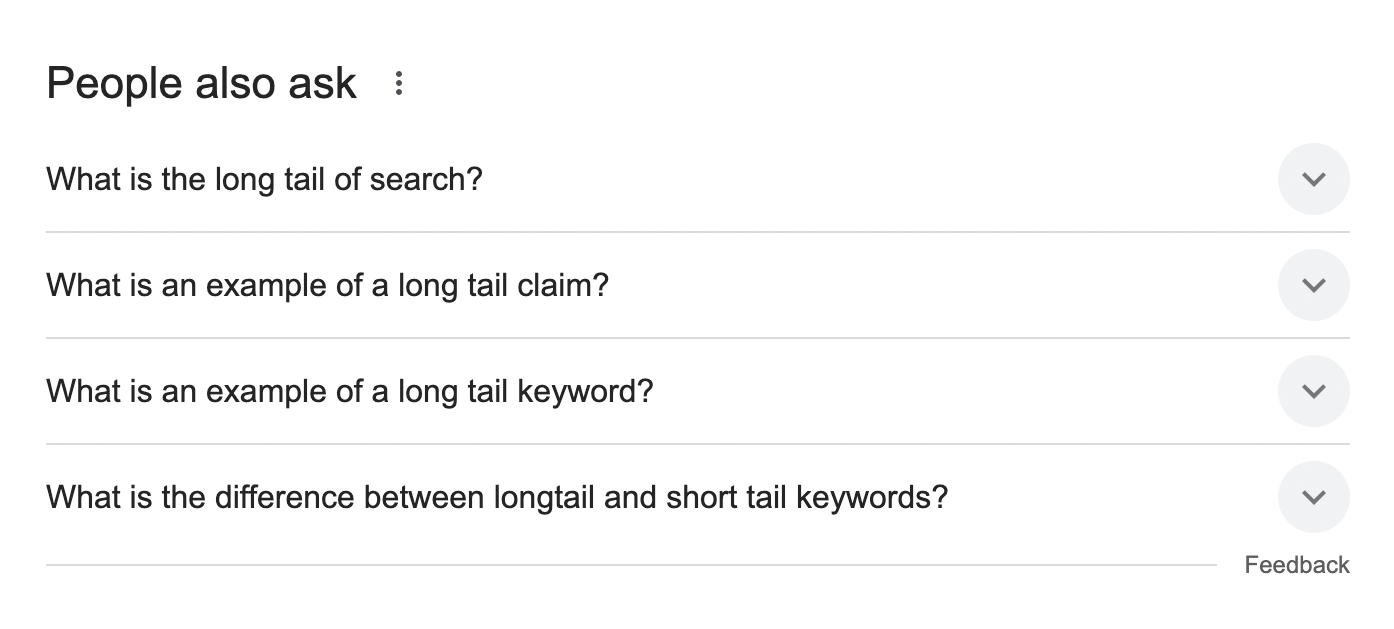
It seems inevitable that building massive, robotic “Info for LLMs” directories that offer zero utility to a human reader will eventually be penalised as an attempt to manipulate the system, dragging down your site’s actual quality score.
The Human Factor
It’s easy to forget that ultimately all optimisation is about getting your content in front of, and appealing to, human beings. For now, humans are still responsible for clicking “Buy Now” and making that phone call. That is the aim and the key metrics our software shows us are attempting, clumsily, to show us how well we are doing that – those metrics are not an end in themselves.
Similarly Google’s own ranking changes reflect the need it perceives to make the search process more informative and more relatable. Processes which Google perceives as ’gaming’ its ranking criteria are heavily punished.
As part of this process wheat is thrown out with the chaff.
Why wouldn’t the inhabitants of Rotherham look for web development in Sheffield?
Even from nutters like us?
It’s a bummer, but so it goes.
The Computers Fight Back
Marketers and sales teams have always exploited quirks in human behaviour – the top corners of a double-page spread of a magazine (the “ears”) always commanded a higher fee for advertising placements because that is where people look first. This may be the first time though that the medium fought back against such trickery.
As the frequency of major ranking updates increases, more and more resource is poured into remedial measures to regain traffic and ranking. The risk is that these measures themselves build time-limited structure and content into the digital estate that ultimately becomes a significant liability in its own right.
Back in the very early days of SEO, there was a remarkably transparent trick of adding keyword-rich, white text onto white areas of the web page. Google caught onto it and punished it pretty quickly and website owners had a rotten time deleting text they couldn’t see. I point this out because structured data is also invisible on the page – secreted into the web page header. Websites now are far bigger and far more complicated than those heady days of such innocent black-hat shenanigans.
If you bury a mountain of misguided JSON on your site – you might be spending a long time, up to your elbows in shit, teasing it out again with chopsticks.
So What to Do?
So, not for the first time, agencies who genuinely care about their customers’ long term success are scratching their heads and wondering “Where do we go from here?”
It’s not the first time Google has wrought carnage upon many, many online businesses and it certainly won’t be the last. Agencies will always rush to catch up and indulge in technical chicanery to regain lost visibility. The temptation to try and spoof the system with some technical magic bullet will always be strong … and the FAQ is just the latest bullet.
But ask yourself what is it all for? Why do they keep changing the rules? … and how can we keep our clients’ content from falling foul of them?
And the answer is simpler than you think.
Now, maybe more than at any point in the last fifteen years, competition in the online search market (some people never leave ChatGPT, some Claude, others Gemini) is at its fiercest: this is in an environment when those popular RAG-based answers are vastly more expensive to provide.
The latest directive from Google for developers is “Creating helpful, reliable, people-first content” and the new watchword (acronym) is E-E-A-T – that is “Experience, Expertise, Authoritativeness, and Trustworthiness” (not our Oxford comma 🤮). If that sounds a lot like the kind of person from whom you’d want to take advice – that is exactly what Google (and everyone else) is aiming for.
Tougher competition means that now, more than ever, the search industry needs to justify and validate each user’s visit to their platform. We said before, it is still humans who make that search, the follow that link or click that “buy now” button – and as a natural corollary of search becoming more conversational, it stands to reason that those results will want to sound more relatable and authoritative.
As agencies rush to make their content digestible to the LLMs, the LLM, in turn, will reciprocate and use that content.
But the FAQ can be just another optimisation hack – open to abuse.
The temptation to slavishly follow the latest optimisation advice may never be stronger but the line between following a fad and spamming your website has never been finer.
So get ahead. It takes nerve, but don’t write for search engines, write for your desired clients … and do it with the authority and voice that you’d like them to hear. The search engines’ need to emulate human desire will forever be just that – an emulation. They will always miss to some extent and honest content will occasionally get punished.
But ultimately, they need to publish what someone has to say – why not you?
Feel free to add a technical flourish, optimise your content before you present it, use technology to deliver it better, but only if you have something to add. Otherwise you’re just polishing a turd.
And if you fill your website with turds, someone, sooner or later, is going to step in one.
“Add Some FAQs”
Well, what did you expect?
SemRush Visibility is calculated from a rigid, preset list of keywords. If your site drops a few positions for a massive, generic vanity term, your score will take a sharp dive. Real-world traffic, however, is shifting. Your traffic is rising because you are winning where tracking lists are blind – capturing hundreds of hyper-specific long-tail queries and earning high-value AI Overview citations. You are successfully trading low-value informational lookers for genuine, high-intent users.
Yes, but the risk is reputational rather than legal.
Because AI Overviews frequently scrape and display original website copy near-verbatim, a client might look at the search results, see the exact same phrasing elsewhere, and accuse you of cutting corners by “lifting” other people’s work.
… and let’s face it, you are. AI is fine for research and there are cases for using AI content as supplied (we have at least one client who is dyslexic), but, again, if you haven’t got something to say …
Sorry, sorry!
Look at a standard web page. To a human, it looks like a layout of text, images and prices. To a search engine crawler, it looks like a messy wall of raw code that it has to feed to an expensive LLM to interpret.
Structured data is a standardised vocabulary (using a global dictionary called Schema.org) that translates your content into canonical facts the machines can instantly interpret.
JSON-LD (JavaScript Object Notation for Linked Data) is simply the cleanest format used to deliver those facts. Instead of messing up your visible design code, JSON-LD bundles all this data into a neat, invisible script block hidden in the header of the page. It explicitly tells the bot: “This page isn’t just a random collection of words; it is a Product, the price is £45, it has 12 reviews, and it is sold by an Organisation based in Sheffield.”
It decouples what the human sees from what the machine reads. Saving search engines time and money.
Probably not – step away from the keyboard and hold your horses. When a major core update hits, the tracking tools go ape because Google is actively testing and calibrating its new algorithms in real time. It is a digital mad-house. If you react instantly by frantically changing your headings, rewriting your metadata or implementing site-wide, bleeding-edge technical optimisations you are shooting at a moving target, mixing your metaphors and quite possibly burying turds all over your site to slip on at the next ranking update.