

Structured data, why do you need it? Well, it’s upon us – the race to find and keep website traffic. After over a decade, when the only real route to online visibility was to gain a top spot in Google organic search results, the chessboard has been flipped. Since the arrival of AI and Google’s AI search overviews, the click-through rate from the #1 spot has plummeted.

Without an actual change to nominal search engine ranking, sales, traffic and conversions are falling. #1 just isn’t what it used to be.
You need every opportunity to feature online wherever possible. Whilst still dominant, Google’s market share is in decline with users turning to Copilot, Chat GPT and others for direct search results. Google’s own AI overviews are themselves taking direct search traffic. In some ways, nothing has changed; you still need great content, correctly formatted and optimised, but now you need every tool in the toolbox. You need structured data.
It’s not as well-known as many other aspects of SEO, and, as of 2025, not every site is making the best use of it. There is an opportunity here – act fast and you may get ahead.
This post breaks down what structured data is, what it does for SEO, and why it’s essential for modern websites – especially if you care about search visibility, accessibility or futureproofing your content.
Table of Contents
What Is Structured Data?
Structured data is a standardised format used to provide information about a webpage and classify its content. Think of it as metadata – but instead of sitting in the background, it actively helps search engines make sense of your site’s content.
Why Do You Need Structured Data?
At the heart of search is speed, we are impatient beasts. On top of that, stories abound of the vast quantities of power and water required to power AI and, don’t forget, for now at least, search is free – yet it all must be paid for. There is a clear imperative for servers to locate, process and return results using as little resource as possible. Now more than ever, search is lazy.
Consider product pages – there are almost as many layouts as there are products. It can be tricky for humans to interpret some of them, why would it be any different for those lazy search bots.


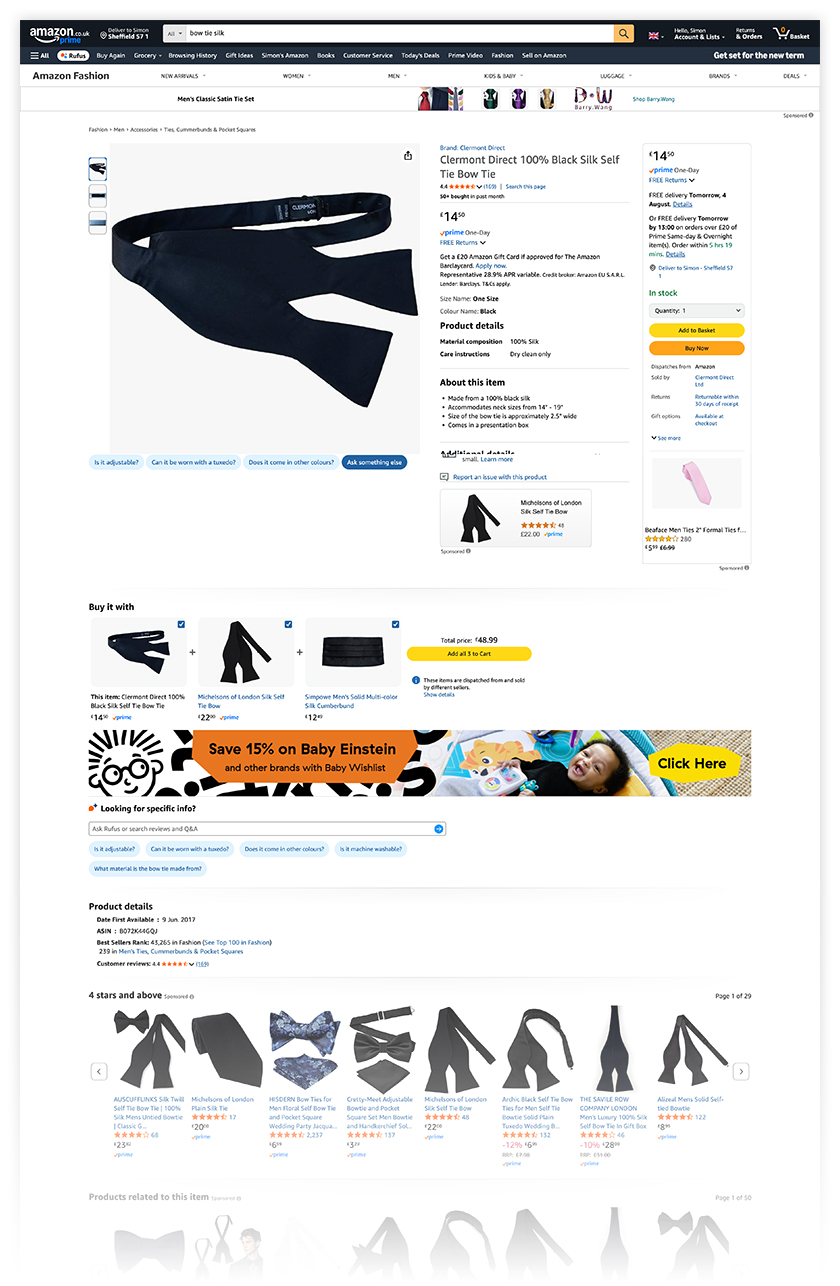
As many product pages as there are products (apple.com, haystravel.co.uk, and amazon.co.uk) – a clear case for structured data.
Enter Structured Data
Adding structured data to a page makes no difference to the design of the page; it is invisible. The data is presented in a consistent format from site to site. Once present on a page, any spider attempting to index your site can ignore the layout and all the data associated with that and just read the structured data. Structured data allows you directly to tell search engines things like:
- This page is a product.
- It costs £39.99.
- It has a 4.7-star rating from 326 reviews.
- It’s in stock.
- Delivery is available in the UK.
That clarity gives search engines the confidence to enhance how your pages appear in search results. It enables them to retrieve data quickly and index it while expending less energy.
Example: Basic Product Schema
Technically, structured data is written using a vocabulary called Schema.org and typically implemented using a markup language called JSON-LD (JavaScript Object Notation for Linked Data).
<script type="application/ld+json">
{
  "@context": "https://schema.org/",
  "@type": "Product",
  "name": "Eco-Friendly Travel Mug",
  "image": [
    "https://example.com/photos/mug.jpg"
  ],
  "description": "A reusable travel mug made from recycled materials.",
  "sku": "MUG-12345",
  "brand": {
    "@type": "Brand",
    "name": "GreenGoods"
  },
  "offers": {
    "@type": "Offer",
    "url": "https://example.com/product/eco-travel-mug",
    "priceCurrency": "GBP",
    "price": "12.99",
    "availability": "https://schema.org/InStock"
  },
  "aggregateRating": {
    "@type": "AggregateRating",
    "ratingValue": "4.7",
    "reviewCount": "326"
  }
}
</script>
Code language: HTML, XML (xml)
This tells search engines everything they need to know to display rich product listings in SERPs.
Why Structured Data Matters for SEO
For SEO, structured data unlocks a range of advantages – some measurable, some more indirect.
1. Rich Results in Google
Structured data enables rich results, such as star ratings, prices, and FAQs.
Example: FAQ Schema
<script type="application/ld+json">
{
  "@context": "https://schema.org",
  "@type": "FAQPage",
  "mainEntity": [{
    "@type": "Question",
    "name": "Is the travel mug dishwasher safe?",
    "acceptedAnswer": {
      "@type": "Answer",
      "text": "Yes, the mug is top-rack dishwasher safe."
    }
  }, {
    "@type": "Question",
    "name": "Does it fit in standard car cup holders?",
    "acceptedAnswer": {
      "@type": "Answer",
      "text": "Yes, it's designed to fit most car cup holders."
    }
  }]
}
</script>
Code language: HTML, XML (xml)
Adding structured FAQ data like this can get your questions and answers directly shown in Google results.
2. Improved Crawlability and Understanding
With structured data, you’re giving explicit meaning to your content. Google no longer has to guess what a page is about.
This is especially helpful for content types like articles, events, recipes, and services.
Example: Blog Article Schema
<script type="application/ld+json">
{
  "@context": "https://schema.org",
  "@type": "BlogPosting",
  "headline": "Structured Data – What It Is and Why You Need It",
  "image": "https://little-fire.com/images/structured-data-post.jpg",
  "author": {
    "@type": "Person",
    "name": "Little Fire Digital"
  },
  "publisher": {
    "@type": "Organization",
    "name": "Little Fire",
    "logo": {
      "@type": "ImageObject",
      "url": "https://little-fire.com/images/logo.png"
    }
  },
  "datePublished": "2025-07-25"
}
</script>
Code language: HTML, XML (xml)
3. Voice Search and AI Integration
Voice assistants rely on structured data to provide direct answers. Well-marked up content (like FAQs or How-To guides) is more likely to be selected for spoken results.
4. Featured Snippets and Position Zero
Structured data doesn’t guarantee a featured snippet, but it helps Google understand and extract the right answer from your content. Think of it as giving search engines the cleanest possible input.
5. Futureproofing Your Website
Google continues to experiment with new SERP features. Structured data often serves as the foundation for these. Implementing it today means your site is ready to take advantage of tomorrow’s search innovations.
Other Reasons to Use Structured Data
Even beyond SEO, there are solid reasons to include structured data:
Accessibility
Structured data gives additional meaning to your content, aiding technologies like screen readers by reinforcing the semantic structure behind headings, events, and product details. Accessibility matters, it’s the second stat in a Google Lighthouse report for a reason.
Internal Use
It can also power internal search, filtering tools, or personalisation systems by making structured content easily indexable and classifiable.
Enhanced Reporting
Platforms like Google Analytics and Tag Manager can be configured to pick up schema elements (e.g., product IDs, categories), helping you track user journeys with more granularity.
Other Common Schema Types
Here’s a quick list of useful Schema types and when to use them:
| Schema Type | Use Case |
|---|---|
Product | E-commerce product pages |
Article | Blog and news content |
Event | Concerts, webinars, local events |
LocalBusiness | Location-based businesses |
Review | Standalone reviews or testimonials |
Recipe | Cooking sites and food blogs |
JobPosting | Recruitment listings |
BreadcrumbList | Navigation paths |
HowTo | Tutorials and step-by-step instructions |
Best Practices
If you’re already implementing structured data (as Little Fire clients likely are), here are a few best practices to keep top of mind:
- Validate everything – Use the Rich Results Test or Schema Markup Validator.
- Use JSON-LD – Easier to implement, update and maintain without affecting visible HTML.
- Be honest – Don’t mark something up as an FAQ or Product if it’s not. Misuse can result in a manual penalty.
- Stay current – Schema.org evolves regularly. Keep an eye on deprecated properties or newer enhancements (like
shippingDetails,hasMerchantReturnPolicy, etc.). - Avoid duplication – Don’t mark up the same content multiple ways unless absolutely necessary.
So Why is This an Opportunity?
Surprisingly, detailed implementation of structured data in not present by default in either WordPress or Shopify. It takes additional work to install it on both. Even Magento only offers it as a paid plugin.
Given the popularity of the above platforms and the fact that so many just install a base site and consider it “launched”, there will be a lot of your competitors out there without accurate structured data.
Final Thoughts
There is an emerging trend toward tricks and stunts to get your site to appear in the AI overviews. Google does not like to be gamed.
But structured data is not a “technical SEO trick”, it’s part of how the modern web works. It connects your content to a wider digital ecosystem, helping search engines, voice assistants and users understand what you’re offering and why it matters.
The examples above are just the beginning. Whether you’re publishing articles, listing products or offering services, there’s a schema for that. And if you’re working with Little Fire, you’re already well-placed to implement it effectively.
Need Help With Your Structured Data?
Get in touch – we’re always happy to help make your content more visible, intelligent and future-ready.