
In common with many an agency, we don’t like to send out a job on a Friday afternoon. Suppliers are often focussed on the weekend and no one wants to spend their Saturday cleaning up collateral damage. But, in common with many an agency, when the client says “jump” we have to ask, “How high?”. So when Structural Repairs said:
“Just put it live!”
… we did.
On a Friday.
A Friday afternoon.
Friday the 13th!
So much could go wrong, and yet it didn’t, and this is why …
Table of Contents
So Who Are Structural Repairs?
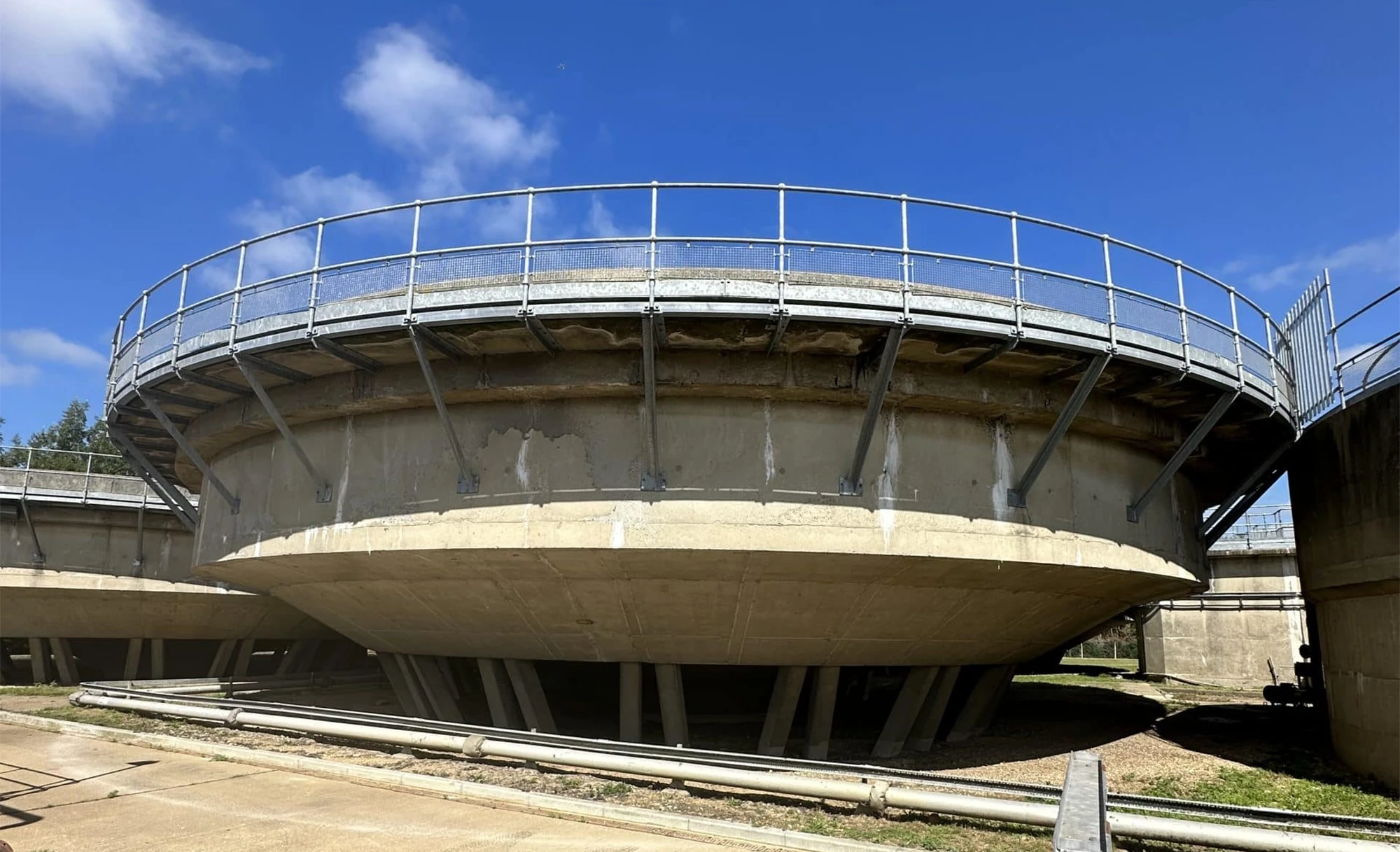
Structural Repairs are specialists in concrete diagnostics, reinforcement and remediation. If you drive a car, use a train, travel over bridges, go to the toilet or drink water, you’ll be glad of Structural Repairs.
Maybe not now, maybe not tomorrow, but soon, and for the rest of your life.
Concrete, bricks and timber – they all appear permanent. But one only needs to look at the recent RAAC crisis to understand that our built environment has a shelf-life you cannot ignore.
The truth is that much of our built environment is already past ‘end of life’. Corporate venality and poor governance share the blame, but the sad fact is that simple structural decay in our water infrastructure is a large part of the reason our rivers are full of shit.
The fiscal cost of replacing the pipes would be colossal. We’ve built cities on top of our water supply; the logistical cost would be astronomical and the carbon released by creating all that new concrete would be catastrophic. Yet the cost of ignoring it will be poison rivers and, ultimately, human lives as our drinking water leaks away.
And that’s just the water.
Structural Repairs really like to fix things. They develop and implement low-intervention, technically advanced systems: systems that leave structures as strong as, if not stronger than, originally designed.
If we want a built environment we recognise: if we want a world we recognise, we need Structural Repairs.
And Structural Repairs efforts are being rewarded, the business is growing exponentially, the last year has seen meetings in parliament, repairs to the national rail infrastructure and a growing presence overseas.
So Why Friday 13th?
For some time, though they couldn’t articulate it, they didn’t feel their website was quite doing the job. Not showing the company in their best light.
We’ve been working with it for a while and we’ve found it cumbersome to work with. There were large tracts of irrelevant and confused content. It was hard to make timely, impactful changes to the site.
The Structural Repairs team has been having some meetings, some big meetings and a website as good as they have become is, in their words, “vital”.
We’ve been working on the replacement site for much of this year. We were getting close to being ready for launch: it turned out we had to be that bit readier.
So What Was Wrong with the Old Site?
Well, it’s not terrible but, in common with many old sites, it has lacked a strategic focus. There hasn’t been a clear emphasis on user conversion and much of the content is out of date.
The site is a WordPress site. There is a lot of “WordPress is dead” talk out there. But it’s 40% of the internet for a reason. This is a big project so, before we started redeveloping, we completed some competitor analysis. You know what? If WordPress is good enough for the White House, we reckon it’ll do for most companies, even one as important as Structural Repairs.
Tangled up in there was a lot of good content, some solid case studies and a plenty of weighty facts.
But it needed a thorough clean out. For some reason, some fool had installed both the Elementor and CornerStone page builders. Neither are necessary and, together, both are a bit of a disaster.
There were entire sections given over to products they do not sell.
The Challenge
It’s not a small site, hundreds of pages, with well-established visibility and reputation online – considerable SEO equity not to be lost.
Wherever we ended up, there was a lot of traffic we needed to retain.
… and from the moment the whistle was blown, the project approved, Little Fire were under a lot of pressure to deliver the new site fast.
The Friday 13th Scenario
So here we were, just ten weeks later. Protoytype pages built and approved (“Faster Simon, Faster!”), enormous numbers of pages created and recreated (“Where’s my site?”) and well on our way to feeling confident to launch.
“Just put it live!”
Launch on the Q.T.
We are neither fools nor hostages to fortune. We were not going to make a fanfare of a Friday launch, we were fine tuning some pages, some features ’til the last moment.
But, by the same token, we’ve done this before. If you’re building a website then you know, at some point, it’s going to have to be launched.
With that in mind:
A Solid Start
We built the site on a known and trusted technology stack – with just a sprinkle of custom development. We used modern, lightweight plugins to boost WordPress, not shackle it. We know what we’re doing.
Strategic Siloing
We didn’t just dump 600 pages onto a server. We siloed website sections by URL, building SEO value right into the very architecture of the site. That way, search engines can instantly make sense of their complex services.
WordPress likes to make URLs ‘flat’:
https://structuralrepairs.com/dummy-pageCode language: JavaScript (javascript)By building hierarchy into the site structure, pages and URLs are lent context and meaning:
https://structuralrepairs.com/expaining-site-structure-using-a/dummy-pageCode language: JavaScript (javascript)People like context and meaning. Because people like context and meaning, Google likes it too.
SEO Protection
Re-launching a large site can result in a huge slew of 404 Page Not Found errors. Google hates a 404; users hate a 404. All those visitors following old URLs need to be looked after. To preserve SEO equity, we completed extensive URL mapping, using 301 redirects to guide existing users to appropriate new content.
Fresh Eyes
We had drafted in industry pals to give us vital third-party sense checking (cheers Suzi!). We were just polishing that feedback off when the client set the hares a running.
Premium Tools
We used some of the best software to manage the transfer. Not cheap, but you get what you pay for.
Bible Bashing
And, we’ve done this before, we have a well-used, well-practised checklist. Nothing. And I mean nothing, goes live without passing those tests. The client would have liked it two hours sooner, but rules is rules.
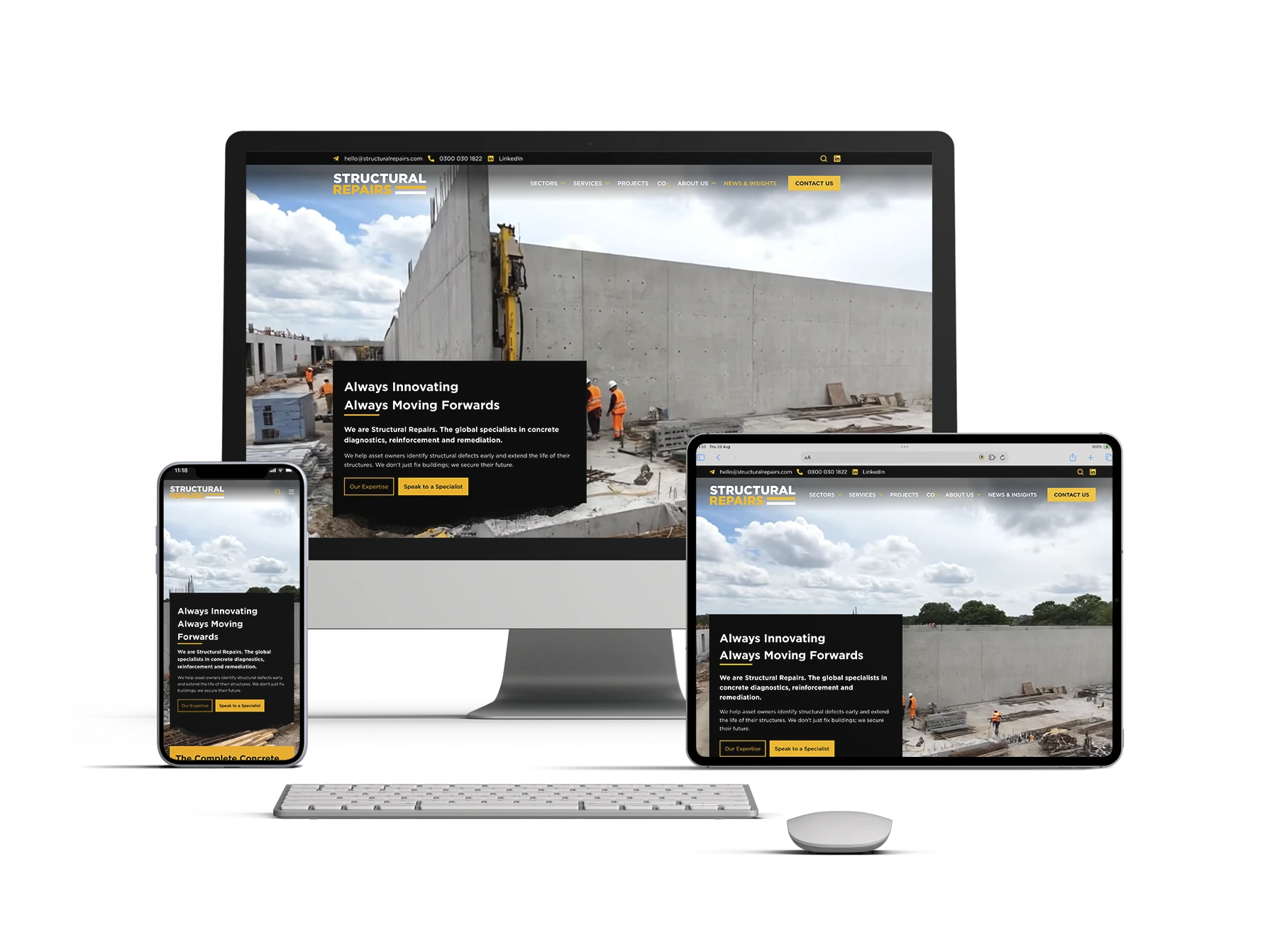
Pardon Me, Just Slipped Out
So, late on a Friday afternoon, the site slipped quietly out into the world. There were no server crashes, no DNS lag, no broken layouts and no panicked weekend phone calls.
Just a smooth, successful deployment of a major digital asset.
It’s not finished (no successful website is); there’s a lot yet to do. But now we have a solid, fast, modern platform with which to take Structural Repairs to where they need to be.
Roger Line, Structural Repairs’ CEO, offered his considered testimonial:
“I’d just like to say again, I really, really, really love the website so much more than words can express. And I think it’s going to be bloody awesome … I’m just so happy working with you, your attention to detail is just super. You are the dog’s f***ing b****cks.”
Save Yourself the Drama
Your website is probably your most critical business asset. If you value your online reputation, your search visibility and your peace of mind, you need a safe pair of hands managing your digital transformation. You need Little Fire.
Drop us a line.