

Your website needs content. Got good knowledge? The world needs to hear it. Writing a blog post is a great way to build trust. Writing a blog post that ranks well is a great way to establish an online presence. Here are seven tips to write a blog post that will help you get seen.
Writing a blog post that performs well in search engines isn’t just about churning out 1,000 words and hitting publish. Search algorithms (and now AI-generated summaries) are designed to surface content that answers questions, demonstrates expertise and provides a good reading experience.
For beginners, this can sound intimidating. But the reality is, with a few tools and a bit of structure, you can write posts that both readers and search engines love.
Here are seven practical tips to get you started.
Before You Start …
Everyone wants to be seen. Everyone wants to rank well in Google, ChatGPT and the many proliferating search environments out there. But never forget, you might want your article to appeal to search engines, but those search engines need to appeal to humans. Computers don’t buy products and services, people do. The value you offer search engines is your knowledge. If you’re going to write a blog post, ultimately, it’s going to have to appeal to humans first.
You might be able to fool search engines for a while, but they hate being gamed. Stories abound of company search rankings vanishing overnight as Google’s algorithms change. The only long-term strategy is to write content with honest intent to appeal to people first.
Table of Contents
1. Start With Keyword Research
We still remember the angry boast of a client:
I spent £10,000 getting my site to the top of Google for “printed latex balloons”
Which, obviously, was great; every time someone hammered “printed latex balloons” into Google, there he would be, right at the top of Google (even though that ain’t what it used to be).
But how often was that happening? We checked how many searches were being made for “printed latex balloons” and guess what …
Zero. Zip. Nada. Zilch.
Not one person had searched for that term in over a month. 10,000 smackeroos completely wasted.
Sad really, because ”printed party balloons” was right there, a single word away and gathering thousands of search requests a month.
Don’t be stupid balloon guy. Before you type a single sentence, work out what people are actually searching for. This process is called keyword research. Keyword research seeks out to identify topics and phrases with demand (people are looking for them) but not so much competition that you’ll be competing with Amazon or Tescos or some other business behemoth.
There are loads of tools online to help you complete keyword research. Most are paid, but here are some free tools to try:
- Google Search itself – use autocomplete suggestions as you type and scroll to the bottom of the page to see “related searches.”
- AnswerThePublic – gives you visual maps of questions people are asking around a topic.
- Ubersuggest (free tier) – shows search volume and difficulty scores.
- Google Trends – lets you compare search interest over time.
- AlsoAsked.com – a free way to map “People Also Ask” questions (see below).
When researching, look for keyword opportunities: terms with lower competition but still a decent search volume. For example, instead of trying to rank for “red wine” (hugely competitive), you might target “ribero del duero” or “great spanish reds for less than twenty pounds.”
We don’t recommend using AI to write your blog posts for you, but it can be surprisingly good at keyword research. Because the Large Language Model-based search engines (LLMs) work by indexing and comparing vast quantities of online text, they can quickly compile lists of sought-after terms. As always, though, AI makes a great starting point, but double-check its output before committing time and effort to writing your post.
2. Pay Attention to “People Also Ask”
Google’s “People also ask” section is a beginner-friendly SEO secret weapon. These expandable boxes show real questions searchers are asking.
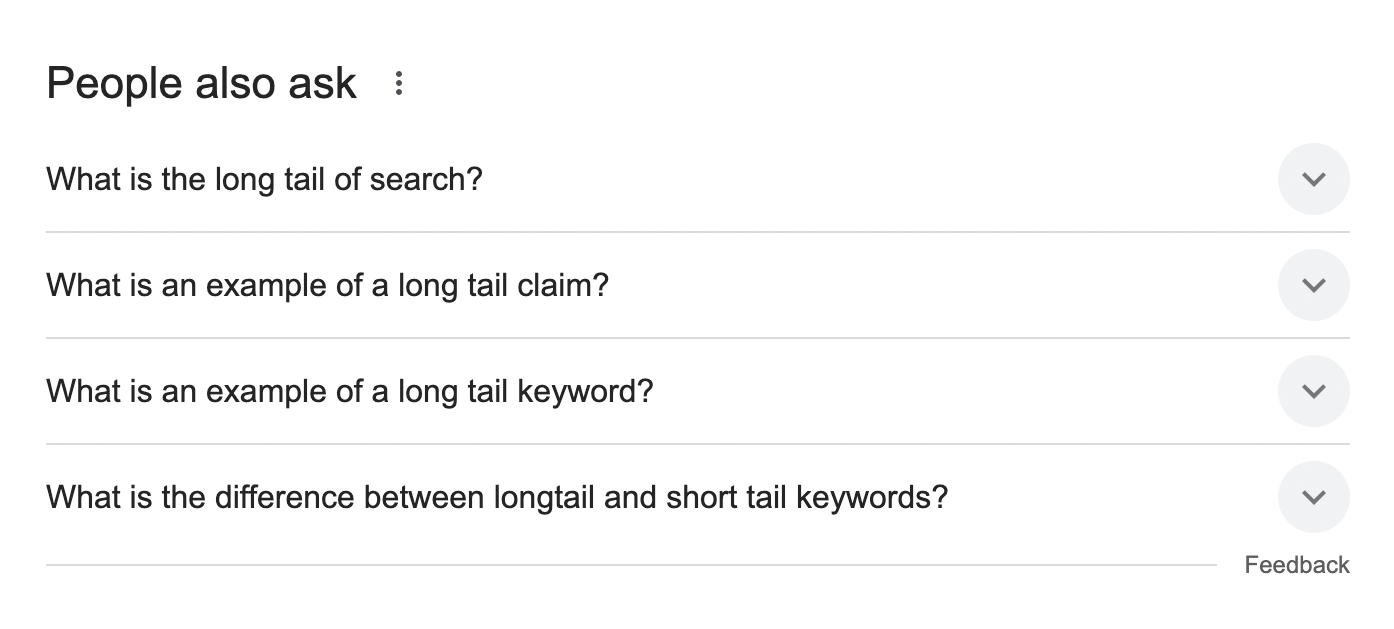
Example: if you Google “home composting,” you may see questions like “What materials should not be composted?” or “How long does compost take to be ready?”
If you include clear, concise answers to these questions in your blog post (ideally using questions themselves as relevant headings), you increase your chances of appearing in these boxes. Not only does this help visibility, but it also ensures you’re directly addressing user intent.
3. Be Aware of AI Overviews
Search engines are increasingly adding AI-powered summaries at the top of results pages. These reduce clicks to websites, but they also present opportunities. These rich text descriptions can reference your content; they are built from website text, after all and can offerprominent links back to your site.

To make yourself relevant:
- Be concise and structured – short, factual answers are more likely to be pulled into AI summaries.
- Offer depth – ensure your blog provides details, examples, and personality that an AI overview can’t replicate.
- Use clear subheadings (H2/H3) – this makes it easier for AI and human readers to find answers.
Think of it this way: AI might provide the quick “what,” but your post should provide the richer “why” and “how.”
4. Write for People First, Optimise for Search Second
We cannot emphasise this enough.
Search engines are becoming more adept at identifying robotic, keyword-stuffed text. That’s why your priority should always be clarity and usefulness.
Here’s a beginner’s formula:
- Use your main keyword in the title, introduction, one or two subheadings, and naturally throughout the text.
- Use synonyms and variations – search engines now understand context, so “holiday” and “vacation” might both be picked up.
- Keep sentences readable. Free tools like Hemingway App or Grammarly (free plan) can help simplify overly complex writing.
If someone lands on your blog and finds a clear, engaging answer, you’re doing it right.
5. Structure Your Blog Post Properly
Good structure helps readers and search engines alike. Every post should include:
- A strong introduction – set expectations and highlight what the reader will learn.
- Clear subheadings (H2/H3) – break up the text logically so people can skim.
- Lists and bullet points – Google loves structured lists; they’re easy to read and may appear as featured snippets.
- Internal links – point to related blogs or services on your site.
- A conclusion – recap the main points and provide a next step.
Adding a table of contents (many free WordPress plugins do this) can also help user experience and improve your chances of sitelinks in search results.
Not everyone is great at structuring the content they write. But the effort is worth it. You can use AI to help here. Although it doesn’t write very engaging copy, it’s great for setting out a structure which you can then ‘colour in’ with your own knowledge, humour or opinion.
6. Optimise More Than Just Text
Search ranking isn’t just about what you write – it’s about the whole page experience. A few simple, often free, steps go a long way:
- Images – add relevant visuals. Use free tools like Unsplash to find great copyright-free images, Google Gemini is great for creating images from scratch – always use and always add descriptive alt text.
- Page speed – use Google PageSpeed Insights (free) to test your blog. A slow site can negatively impact rankings.
- Meta title & description – write a catchy title (with your keyword) and a description that encourages clicks. Many free SEO plugins like Yoast SEO or RankMath let you edit these.
- External links – reference credible sources (news sites, government data, academic research). This builds trust.
These “on-page” optimisations may feel small individually but add up to big ranking improvements.
7. Keep Posts Fresh and Updated
Search engines reward freshness. A blog post written two years ago and left untouched is less likely to rank than one that’s updated with new stats and insights.
Make it a habit to revisit posts every 6–12 months to:
- Add up-to-date facts and figures.
- Check for new “People also ask” questions you can answer.
- Improve formatting (e.g. more headings, lists, or examples).
- Replace broken links or outdated tools.
- Spot the mistakes you will have made … no one is perfect!
Think of your blog posts as assets to maintain, not one-off tasks. The more you refine them, the better they’ll perform.
Final Thoughts
Writing a blog post that ranks well isn’t rocket science – it’s about combining a little keyword research, coherent structure and, if needed, occasional updates. Beginners can absolutely compete if they utilise free tools, explore keyword opportunities and focus on providing genuinely useful content to readers.

It is a skill, creating content, and it’s unlikely you’ll be great at doing it at first. But nobody ever got better at anything by not trying it. Writing a blog post prompts you to consider the knowledge you are imparting; double-check what you publish as you publish and you will learn as you do so.
Remember: search engines want to serve people, not algorithms. If your post answers real questions clearly, offer a smooth reading experience and shows some expertise, you’re already on the right track.
And with each post you write, you’ll get better at spotting opportunities others have missed.