

The internet nerd’s lexicon is full of food references; we’ve been posting cheesy, food-related articles for ages. So, as we choose which content to consume from the menu, we guess it’s high time we asked ourselves: “Why is spam called spam?” and why a whole host of other daft names exist.
Spam
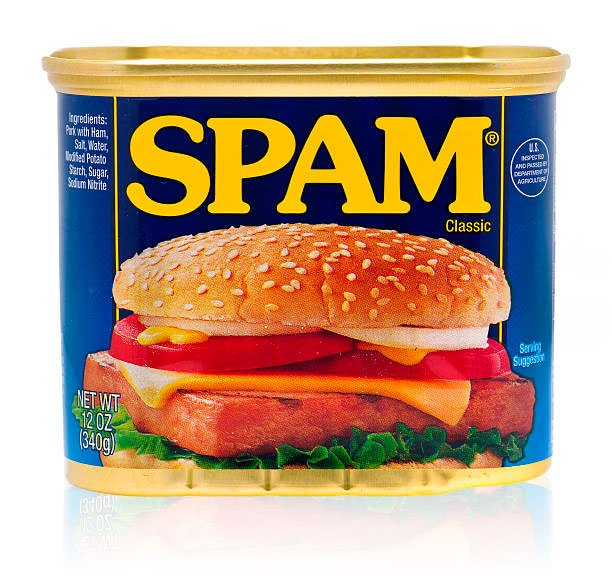
Spam, spam, spam … the name conveys a lot.
Generic quality, mass-produced, unwanted … how better to describe the unsolicited messages forced upon us through the internet?
The term derives from the 1970 Monty Python sketch “SPAM”. The sketch takes place in a café where the menu includes spam with everything. A customer tries to order something that doesn’t contain spam without success. Whether you want it or not, you’re going to get some spam.
Cookies
On its own, a web page is ‘stateless’. HTML doesn’t know what web page you came from or what you did there (e.g. logged in, added something to a cart). On its own, a web page is quite a limited thing.
To fix this, a technology was developed where the website would get your browser to store a file with a small message in … like a fortune cookie. That way, when you arrive at the next page, the website can identify your cookie and say “Hi Simon” or show you the contents of your cart. Suddenly the internet comes alive.
Cookies are a big topic, we’ve written entire posts about them.

Breadcrumbs

Remember the fairy tale? The one where Hansel lays a trail of breadcrumbs as he and Gretel venture into the deep dark woods so that they could find their way home again.
Similarly, the trail of small links commonly found at the top of a webpage are there to help you find your way back to the homepage.
It didn’t go well for Hansel and Gretel. Birds ate the crumbs, the children lost themselves in the woods for three days and ended up in thrall to a cannibal witch. Read into that what you will.
Salt and Pepper
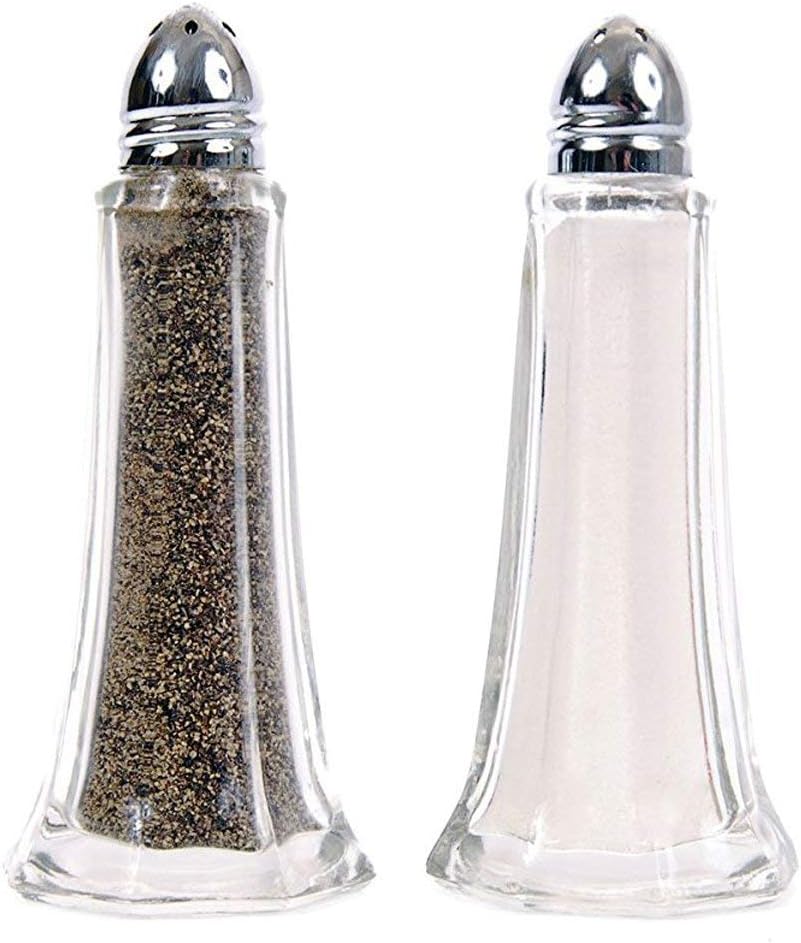
Less ubiquitous than many foodie terms in computing, salt and pepper refer to important practices in password encryption. Salting and peppering describe methods that make password encryptions unique … effectively by adding ‘seasoning’.
Hash
Yummy hash, mashed up potato, onion and other lovely ingredients – commonly used with salt and pepper.
Developers often store passwords and other secret data as hashes. The hashing process mashes up the original data in a fashion which cannot be reversed (that’s encryption).
Hashing any given string will always create the same hash. For example, the SHA1 hash of ”password123” is “cbfdac6008f9cab4083784cbd1874f76618d2a97” and always will be.
You can compare the hash you have on file with a hash of the password the user just entered. You don’t need to know their password, but you can establish that they do.
Hashes on their own are not secure – because the output is always the same. Hackers have built up tables of common (and uncommon) strings and their hashes, enabling reverse lookups. Try Googling “edbd1887e772e13c251f688a5f10c1ffbb67960d”. A developer will use salt and pepper to make every string is unique before sending it to be hashed.


Spaghetti
Developers often refer to bad code as “spaghetti”. Poorly organised, jumbled up and with no clear start or finish points – the comparison is obvious.
Java
The cross-platform programming language had a number of names: ‘Oak‘, ‘Green’ before finally earning the name ‘Java’. The reasons for the name changes are a boring matter of legalities and trade names.
Kim Polese (Oak product manager at the time), explains why it ended up being named after coffee:
I wanted something that was cool, unique, and easy to spell and fun to say.
Judge for yourself.

Nerds
Did you know this common term for a geek has its origins in food and drink? Nope, nor did we.
If you believe the internet, in the 1940s at the Rensselaer Polytechnic Institute, sober students gained a new nickname. The drunks were “drunk”, so those displaying the opposite behaviour became “knurd”. The spelling was later simplified to “nerd” over time, gaining widespread recognition through its inclusion in a Dr. Seuss publication and the television series Happy Days.
So Why All the Daft Terms?
Well, the Internet is a whole new world … since its official birth (1st January 1983), its growth has been explosive. The need for a vocabulary to marshal and communicate its myriad concepts is pressing and ongoing. Just as the east coast of the USA is littered with place names which would have been familiar to the first European colonists (‘Washington’, ‘Boston’, ‘New Amsterdam’ etc.), it was inevitable that analogies would be sought to communicate ideas which otherwise might be described using abstruse TLAs.
Many of these terms are kitsch, and some of the metaphors jarring. But, in the end, if such a term illuminates a difficult idea, then it has succeeded. Us web monkeys are not generally great communicators. If a naff verbal joke explains the purpose, benefit and nature of a string stored in your browser cache in a single word, it has done us all a favour.