
I don’t like it. Today, at least, I don’t. iOs26 and its new liquid class interface – it seems to ooze 2012 skeuomorphism.
I don’t care much, I’ll forget what the old design looked like soon enough. But it irks me, it seems bereft of ideas. It seems dated. It seems naff.
I can’t imagine Steve Jobs or Jonny Ive would be (would have been) full of love for it either.
simulated refraction
The iOs26 interface suddenly sports gradients (suggesting curved surfaces), highlights to the top left of icons (suggests a raised beveled object) and new effects applied to translucent window backgrounds (with differential blurring and simulated refraction) all attempt to represent a more three dimensional space.
None of these elements are, in themselves, new. All these elements have been seen in the Apple mobile interface before, but this new concoction is more layered, more textured, more pronounced in its attempt to represent physical materials in a two dimensional space. In short it’s much more skeuomorphic.
Is this a problem?
Maybe not.
But we reckon it’s worth a deeper look.
Table of Contents
What is Skeuomorphism?
According to our friends at Dictionary.com (cheers lads):
Skeuomorph n.
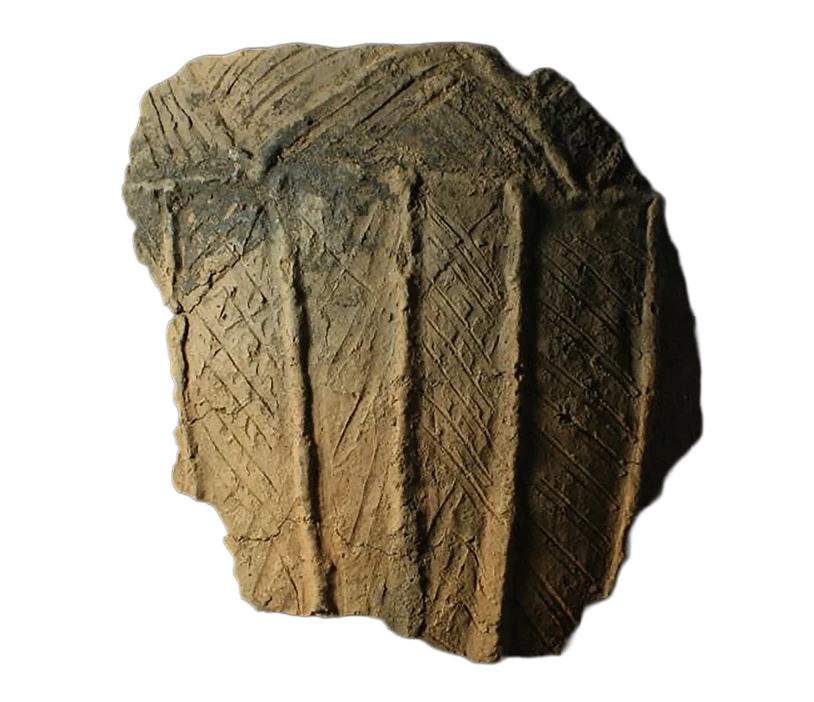
- an ornament or design on an object that mimics the form of the object when made from another material or by other techniques, usually one that reflects a previously functional element, as an imitation metal rivet mark found on handles of prehistoric pottery.
- Digital Technology., a design or design element, as an icon on a digital device, that mimics the three-dimensional look or the sound of a physical object, such as LCD hands on a smartwatch or the shutter sound on a digital camera.
Where Did Skeuomorphic Design Come From?
It’s not new. From ancient grecian pottery to the Celtic grooveware from the Ring of Brodgar and other sites across Bronze Age Scotland, it’s everywhere. Skeuomorphic design pre-dates the pyramids.
As soon as human beings engaged in manufacture (literally ‘hand-making’), it seems they were busy making things look as if they were made from something else.
A Matter of Taste?
Aesthetics are subjective, design isn’t.
Skeuomorphism is often dismissed as decoration, as kitsch, as the creation of unnecessary visual clutter.
Mies van der Rohe was not a fan – and we’re all very fond of Bauhaus and its legacy nowadays.
But why is decoration for decoration’s sake a problem? I find it hard to believe many would decry the headstone of a Corinthian column as vulgar artifice.
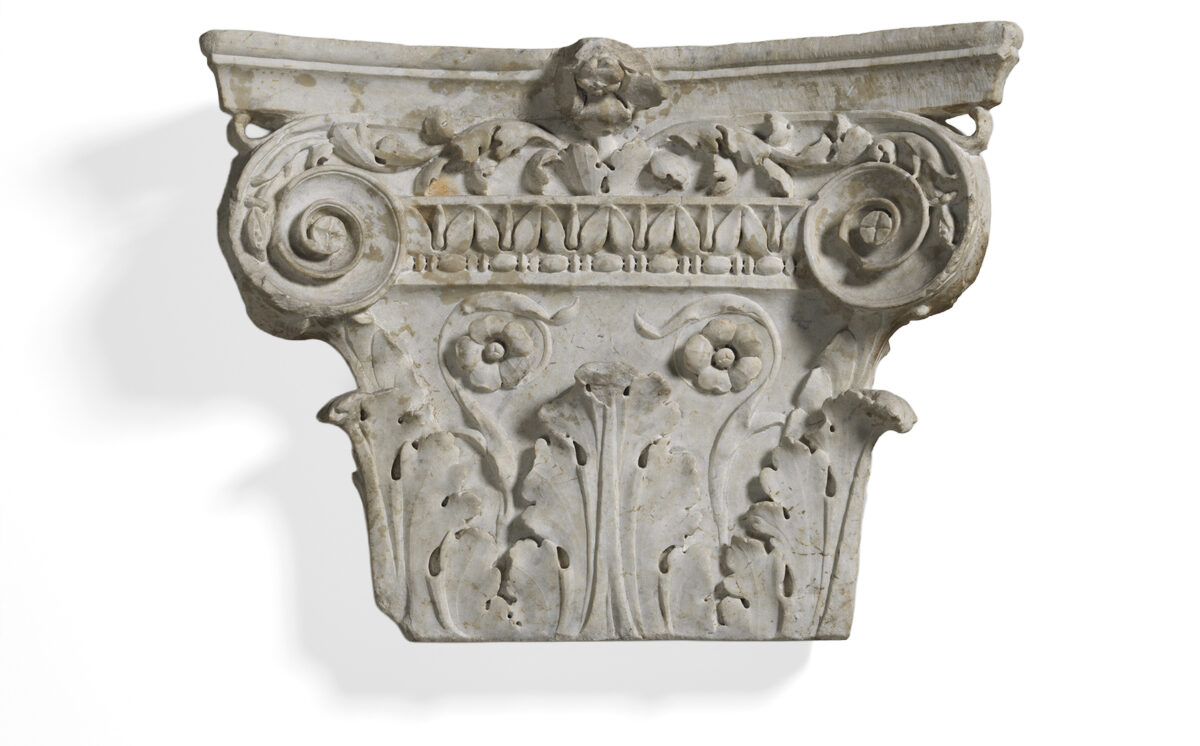
So is the novelty the issue? Is there some kind of dissonance between the decorative (cosy, familiar, old fashioned) and the digital (sleek, modern, clinical). Aside from the fact that humans have always had a tendency to decorate, it’s worth looking at how skeuomorphism found its way into interface design.
Helping With the Paradigm Shift
Back in the early 1970’s the Xerox corporation were wrestling with a problem. There were these new-fangled things called computers: but no-one could be enticed to use them. Because no one could use them, no one could see how useful they would be.
At Xerox PARC (Palo Alto Research Center), Xerox worked with teams of children and programmers. Between them they developed a visual and physical vocabulary which, quite literally, a child could understand. You select items from a menu, with your mouse, push a button and open a window.
The original Apple Mac was the first commercial computer to implement the fruits of the research in 1984 and the rest is history. It is almost impossible to overestimate the impact of the development of the WIMP interface has had on the world.
At its very heart, all modern computing implements foundational, abstract ideas as quasi-physical entities. For example: directories – which are nothing more than nested lists of files – are displayed as ‘folders’ whose contents are displayed within ‘windows’.
It is extremely common to lend the flat screen of a computer display the illusion of depth. Even the most minimal desktop interface displays these windows in layers. It is a rare and puritanical windowing system that doesn’t put a shadow on those ‘layers‘.
The Ugly
So, interface design from the first days of Macintosh and Windows has always embraced visual metaphors and a sense of visual ‘depth’.
The power of the graphics processors has grown continuously: devices could display more colours, eventually reaching 24bit or full colour in the early 2000s. It gave interface designers a great deal of rope.
And with that rope the design monkeys slavishly imitated real world applications.
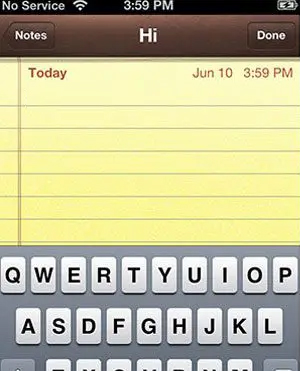
have to take notes in Marker Felt font on US legal notepaper?
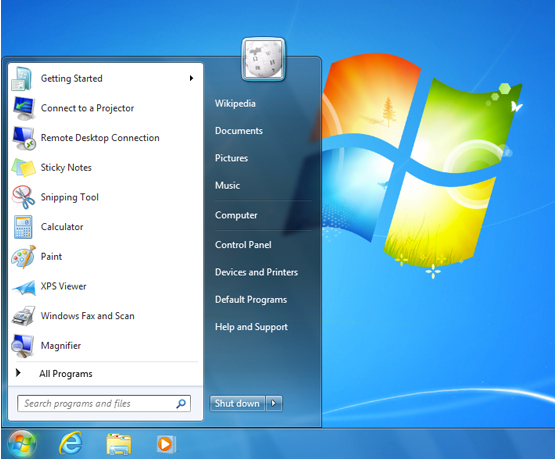
At the same time, there was a vogue for glossy, liquid buttons and interfaces – championed by Apple. As Windows tramped on with square bevels, the new Safari Browser offered Mac users stimulating eye-candy.
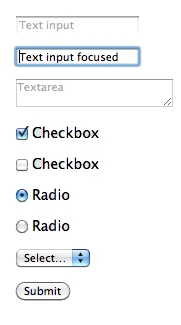
Windows, it seemed was powerless to do anything but follow …
And then, almost out of nowhere, Windows 8 appeared. Windows 8 screens were flat and slick and opaque. Buttons were no longer glazed lozenges but plain, flat coloured rectangles.
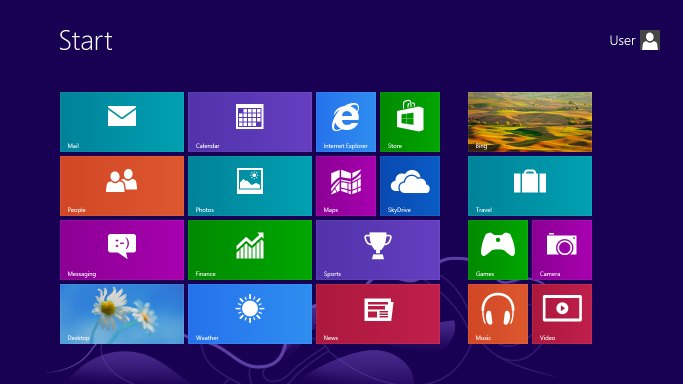
It all looked very adult, very stylish – and suddenly everything that went before seemed very frivolous, wasteful and vulgar.
It was a bit of an ‘Emperor’s New Clothes’ moment.
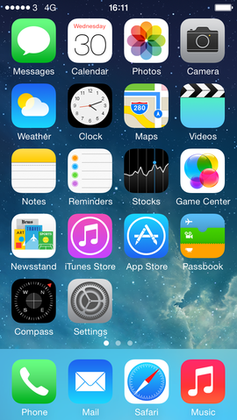
Shortly afterwards Apple released iOs7: bevels were gone, shadows were gone, gloss was replaced with tasteful translucence.
Skeuomorphism, it seemed, was dead.
The Good
And yet, and yet … some elements evaded the extinction …
Tabs
Collating several pages of related content into a simple graphical element, represented by tabs resembling a card index has persisted. The metaphor works and interface designers have yet to come up with anything clearer or more compact.
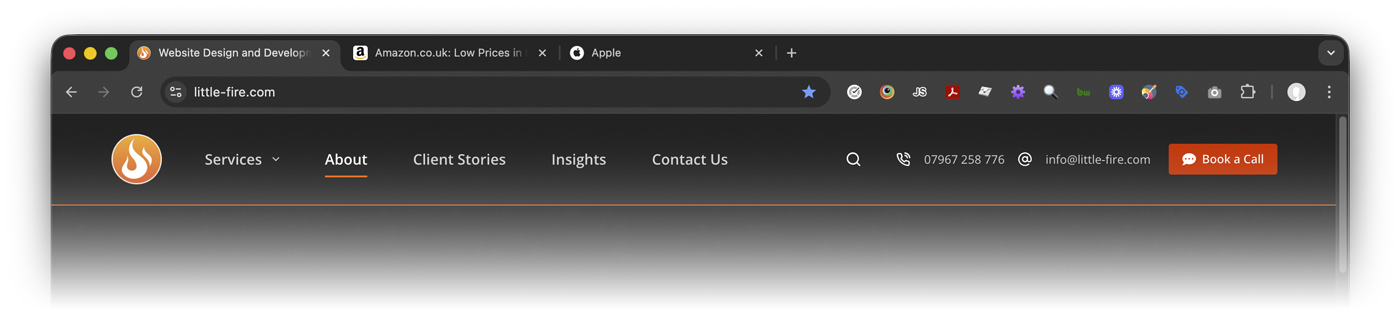
They may have been much minified, simplified and flattened, but tabs are still going strong.
Cards
Bounding elements in a border or, at its most simple, a drop shadow is a design practice as old as the hills. It wasn’t until Google named them ‘cards’ in their Material interface guidelines that everyone has their lightbulb ‘Aha!’ moment.
Of course they are cards. Why wouldn’t they be?

Skeuomorphism: It’s a Good Thing
In truth, interface designers have struggled to keep their displays as abstract, smooth and flat as Windows 8 first espoused. It makes sense, if a flat square rectangle is identical to a button then how can you tell the two apart? It’s very easy to click on the wrong thing. When everything is flat it’s hard to discern interface from content.
Fundamentally, skeuomorphic design offers users a visual language – a means of understanding and manipulating a complex environment. As in all communication, the message should not be impaired by the delivery. Skeuomorphic or not, an interface should not force a user to think.
Consider these heat maps:
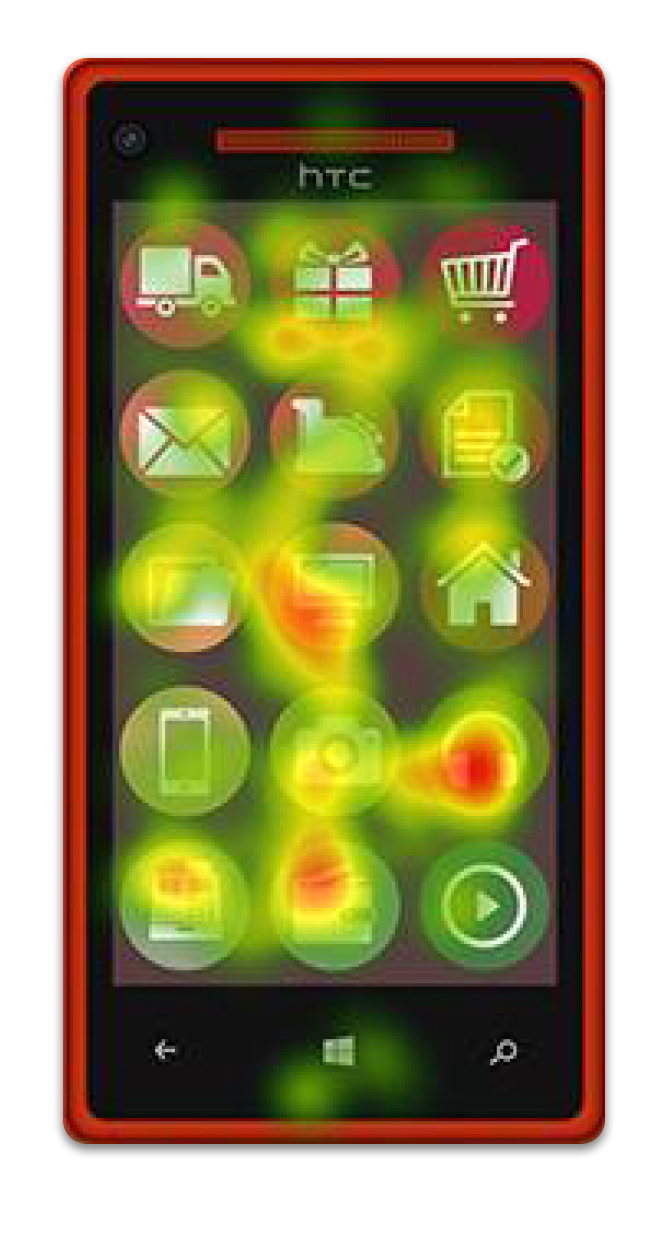
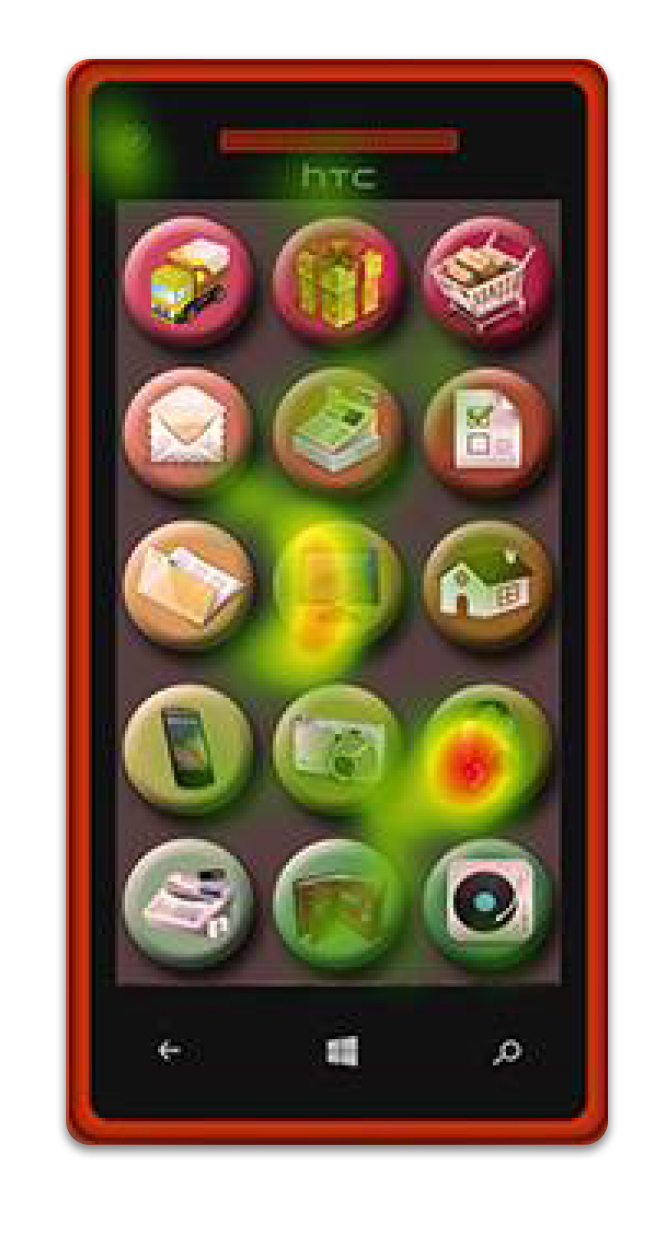
The skeuomorphic interface might be considered by many to be visually clumsy, with diagrammatic images rather than flat, abstract icons. However, the latter heat map clearly shows far less ‘deliberation’ and ‘dithering’. Although it may look cheesy and old-fashioned, the second screen represents the interface that users find easier to use at speed and with confidence.
Skeuomorphism works.
The Bad
It’s not great, the iOs26 interface, it really isn’t. Time and again legibility has been sacrificed for slick translucent effects. Time spent adding animations and effects really would have been better spent making the interface fundamentally more usable.
Some decisions seem genuinely regressive. For example, why has the icon for the Preview application been replaced with an image of a photographer’s loupe? Even photographers don’t use them any more.
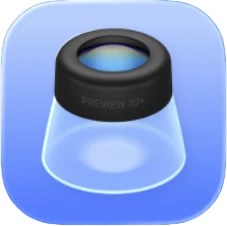
… and don’t get me started on what OS Tahoe has done with tabs.
But all this is carping. Apple don’t care and they will fix and refine the interface as time goes on. But the fact that the debate has returned to the language (the interface) rather than the message (the software itself) speaks, probably, to just how thin that message actually is.
Why Does it Matter?
Communication matters. Great design is only great if it reinforces the message rather than detracts or distracts from it.
Design is not just visual – a website can look convincing and yet still be hopeless to use.
Decoration is not evil or vulgar but should not be for its own sake. A peacock sports those feathers for a reason.
We love this stuff. Communication matters to us. We know what makes for meaningful, successful design – and we’d like to make it for you.
Need Our Help?
Talk is free. Find out how we can help you.
References
We enjoyed writing this one, so thanks to everyone out there for their ideas, research and images: