

We’ve noticed it. You may have noticed it. Social media has certainly noticed it. These days, many, many websites look the same … and why do so many websites look the same?
It’s True
This is not just an opinion; studies of over 1,000 of the most successful websites confirm that the internet have become far more visually homogenous since 2010. Variations in colour usage and layout have declined sharply since 2016.
People have long complained that car adverts all look the same, consider these …
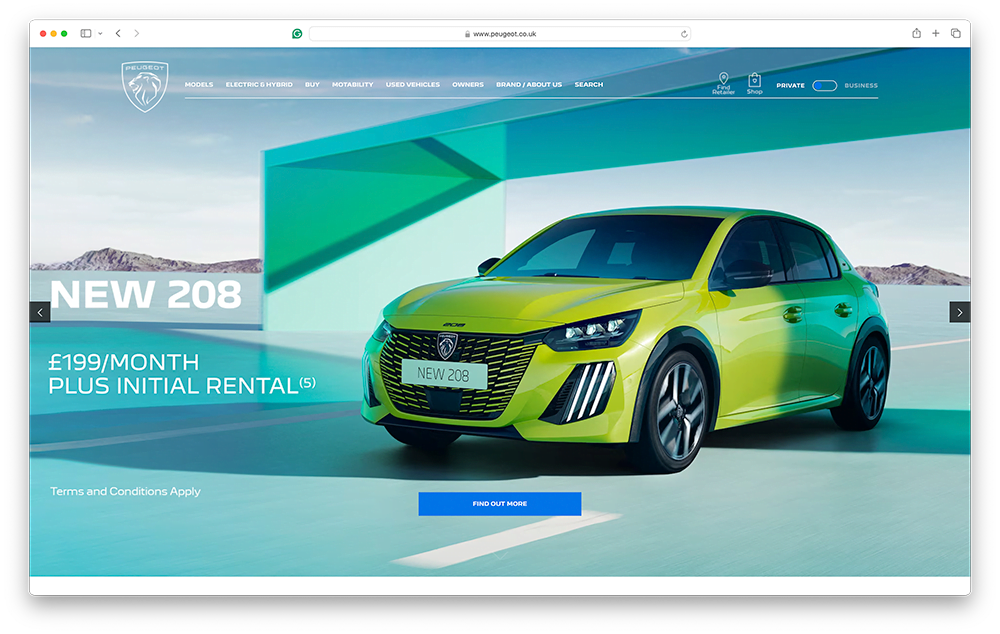
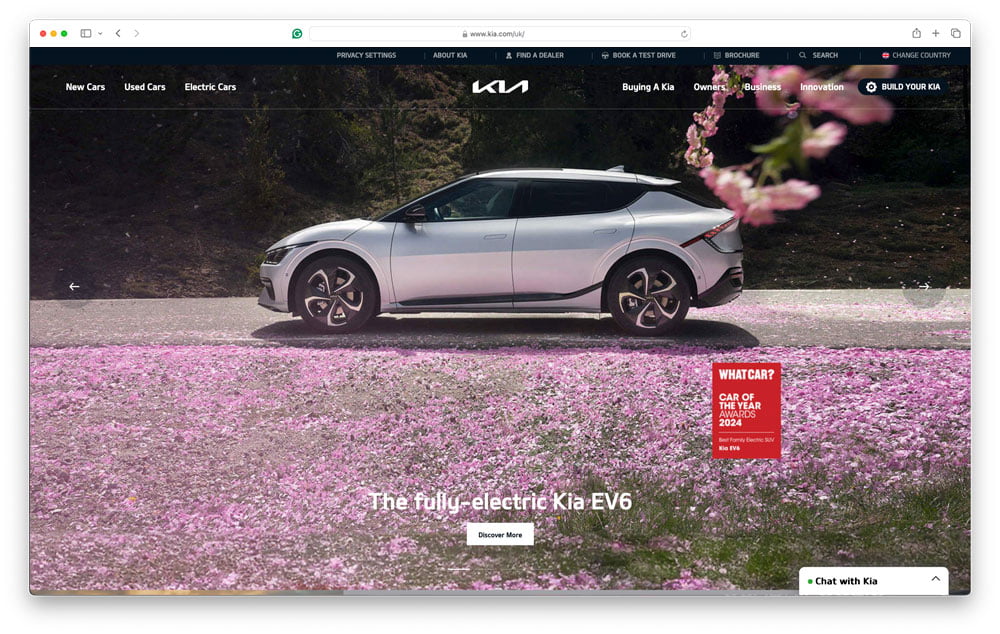
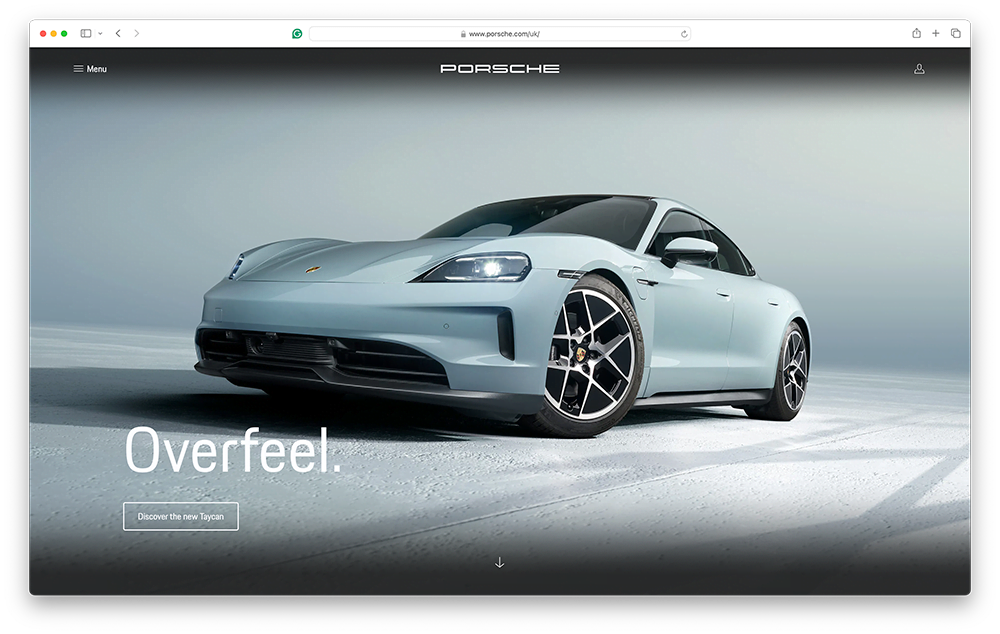
Fiat, Porsche and Kia as of March 2024 … all images copyright their originators.
Regardless of the market or the cost of the product, the level of self-similarity is huge.
We All Know the Formula
The logo goes top-left or top-centre; site search, basket and login somewhere top right; prominent masthead image with large call to action … if you’re on a mobile site and there’s no burger menu …
We do all know the formula, and so, to a degree, it has become self-fulfilling. If you want a successful website, it makes sense to model it on all those other successful websites out there.
Most websites are commercial tools; every moment spent dithering over how to proceed down the sales funnel costs sales. The urge to optimise is relentless. There is room for debate (try searching for “what colour should a Buy Now button be”) but the driver of the choice is seldom aesthetic.
Further, you know yourself, if a website doesn’t conform, if you cannot find the checkout button, you’re quite likely to skip to a website where you can. To some extent, we’re all authors of this beigeness.
So Are All Websites Made the Same?
You’d think so, repetitive tasks are cheaper. Making all sites the same way would represent economies of scale. But, bizarrely, the opposite is true. The number of technologies through which HTML can be published has diversified and the number of development frameworks which run on them has too. Code creation has never been more diverse.
To a degree though, all these technologies are all trying to crack the same nut. It’s not just about the naked commercial drive. Sites need to be responsive; sites need to be accessible and, above all, sites need to be usable.
For these reasons, website design is a much larger, more technical task than it used to be.
All developers rely on code libraries to deliver operable, professional-looking websites. All developers rely on code libraries to enable their creations to adapt to the ever-changing internet. Without leveraging third-party technologies – in effect, sharing collective development effort – every website would soon be hopelessly mired in technical debt almost as soon as the developers’ backs were turned.
It seems inevitable that using the same building blocks to fix the same problems will result in similar looking outcomes.
All Websites Look the Same … Is It a Problem?
Potentially yes. Whilst it is better that more websites are accessible and that more websites work well, providers of functionality become increasingly powerful. When Google says “Jump”, the world is obliged to ask “How high?”.
As yet, AI is still producing generic text, generic images but very, very cheaply. As Robert Smith put it, it’ll get us “not quite as far, but in half the time”: expect things to get worse before they get better.
Designs do become homogenous – when did you pick up a (physical) book and find the index at the front? As with books, conventions like this make the internet easier to use.
The fact that accurate, professional design frameworks are available for so little money is enormously democratic. A convincing online presence is available to far more people than ever.
At Little Fire, we’re optimists. There have been dull periods in popular music and film. There are some astonishingly talented people in the industry, great illustrators, great typographers and designers. Just as the designer of a book cover no longer needs to know anything about offset lithography, taking many of the technical challenges out of presenting content online may yet liberate a world of talent.
We reckon the best is yet to come.